Your Practice Test Is a THERMOMETER, Not Medicine

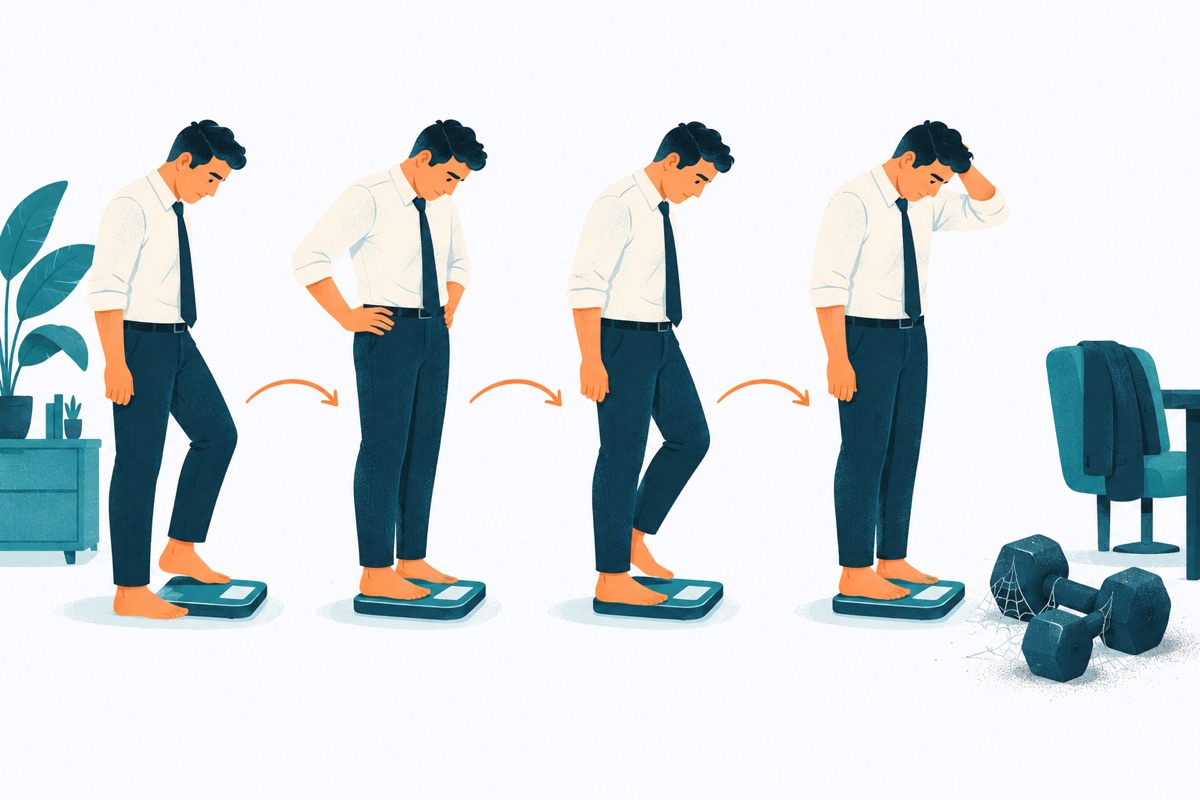
It is Sunday night. You just finished your third Executive Assessment practice test of the week. You squeezed it in after the kids went to bed, the way you squeezed in the other two after long days at work. You click for the score, and it is the same number you got last Sunday. Maybe one point higher. Maybe one point lower.
You feel tired, but you also feel productive. You did the work, right?
No. You took your temperature three times and wondered why the fever did not break.
A practice test is a THERMOMETER. It tells you where you are. It does NOT make you better. If you keep taking test after test and hoping your score climbs, you are treating the thermometer like medicine. It is not medicine, and you cannot swallow your way out of a fever with it.
What a practice test actually does
The Executive Assessment (EA) is the test GMAC built for Executive MBA programs. On today's version you get 90 minutes, split into three 30-minute sections: Integrated Reasoning with 12 questions, Verbal Reasoning with 14, and Quantitative Reasoning with 14. Each section is scored from 0 to 20, and your total runs from 100 to 200. All three sections count the same. You can see the full layout on the official structure page.
The test is also adaptive section by section. That means how you do on one part of a section shapes how hard the next part is. So a full practice test gives you a decent snapshot of your level.
That snapshot is useful. It shows you a rough score. It points at your 'weak' spots. It lets you practice sitting still and focused for 90 minutes.
What it does not do is teach you anything. Not one new tactic. Not one fixed habit. You walk out of a practice test with the exact same skills you walked in with.
The time math nobody does
You are a working professional. Your study time is the scarcest thing you have. So let's count it.
Three practice tests is 270 minutes of test time. Add setup and checking your score, and you are past 5 hours. That is 5 hours of measuring and zero hours of training.
Now the wager. I'll bet you spent LESS time reviewing those three tests than you spent taking them. Maybe a lot less. Maybe you looked at the questions you got wrong, read the explanation, nodded, and moved on.
Stop reading for a second and check. Be honest. How many minutes did you spend reviewing your last practice test?
If that number is smaller than 90, you found the problem.
5 mistakes I watch people make with practice tests
- Taking a new test every few days. Your skills do not change in three days, so your score will not either. You just burn tests you might need later. INSTEAD: Take one full practice test, then train for at least a week or two before you take the next. One test per week is the MOST you should ever do, and most people need longer between them.
- Reading a one-point move as news. A score that bounces up or down a little does not mean you got better or worse. It means you performed at the same general level. INSTEAD: Look for a trend across several tests spread out over weeks, not a reaction to one number.
- Only reviewing the wrong answers. Some of your right answers were guesses. Some took twice as long as they should have. Those are future wrong answers in disguise. INSTEAD: Review EVERY question. Ask: did I get this right for the right reason, and did I do it the fast way?
- Calling it a 'careless' mistake and moving on. 'Careless' is not a cause. It is a label that lets you skip the thinking. INSTEAD: Name the exact cause. Did you misread the question? Do the math in your head? Answer for the wrong thing? Write the cause down, then train against it.
- Doing all the work in your head. On a 30-minute section, it feels like writing things down will slow you. It does the opposite. Work in your head is where the silly mistakes live. INSTEAD: Put notes on paper for every question, even the 'easy' ones, every single time you practice.
Where your missing points really are
Most people think their score is stuck because of the hardest questions. It almost never is. With only 14 Quant questions and 14 Verbal questions, every single one carries real weight. Dropping two or three questions you KNOW how to do costs you more than missing the monster question you were never going to get.
So when you review, hunt for the gettable ones. Here is the kind of question people miss all the time, not because it is hard, but because of how they work it.
Notice what happened there. No fancy math. Two tries, a clear note, and one quick check. If you missed that on a practice test, taking ANOTHER practice test will not fix it. Training the habit of writing down what the question asks will.
What the medicine actually looks like
If the practice test is the thermometer, here is the treatment:
- Review longer than you test. For every 90 minutes of practice test, plan more than 90 minutes of review. Go question by question. Write down why you missed it or why you were slow.
- Redo questions. Go back to questions you already saw, a week later, and solve them again from a blank page. What's more useful: having seen 1,000 questions once, or owning 300 of them cold? It's not about the right answer. It's about WHAT YOU'RE DOING to get there.
- Train one skill at a time. A tennis player does not get a better backhand by playing full matches. They hit backhands, hundreds of them. If your notes say you keep misreading Data Sufficiency questions (the kind where you decide whether the facts given are enough to answer, not what the answer is), then spend a session doing nothing but those.
- Practice all three sections. Integrated Reasoning counts exactly as much as Quant and Verbal. A lot of people skip it in training because it feels strange. That is a choice to give away points.
- Then measure again. After real training, take your next practice test under test-like conditions. Now the thermometer has something new to read.

The forced choice
You have to decide what you want MORE: the feeling of being busy, or a higher score. Practice test after practice test gives you the feeling. Careful review and focused training give you the score. You do not get both from the same hours, and your hours are limited.
The good news is that the EA is a predictable, standardized test. You can train for every question type you will see. The test will give you the score you EARN, and earning it is fully in your hands.
Your challenge for today
Do NOT take a practice test today. Instead, open the last one you took. Pick five questions: two you got wrong, and three you got right but are not sure why. For each one, write the exact cause of the miss or the slowdown in one sentence. Not 'careless.' A real cause. Then redo all five on paper, from scratch, the fast way.
If you can't name a cause for one of them, stay with that question until you can. That question is your medicine.