One Bad Practice Test Means NOTHING

It's 9:40 on a weeknight. You just finished a practice Executive Assessment after a full day of work, and the score on the screen is lower than last time. Not a little lower. Lower enough that your stomach drops. Within ten minutes you're googling new prep books, thinking about pushing your test date and wondering whether you're just 'not a test person.'
Stop. Close the tabs. One bad practice test means NOTHING by itself. It is one data point. Tearing up a study plan over one data point is like quitting the gym because you stepped on the scale after a big dinner. Your plan might need a tweak. It almost never needs a bonfire.
A Practice Test Is a Measuring Device, Not a Verdict
A practice test measures you on one day, under one set of conditions. It points to weak spots. It does NOT make you a better test taker, and it doesn't define you either. The Executive Assessment (the EA, the exam built by GMAC for Executive MBA programs) is short: 90 minutes, three 30-minute sections. GMAC lays out the structure: Integrated Reasoning with 12 questions, Verbal Reasoning with 14 and Quantitative Reasoning with 14. Each section is scored 0 to 20, the total runs from 100 to 200, and all three sections count the same.
Now think about what that means. Fourteen questions is not a lot. Two or three silly mistakes in one section can move that section's score, and that moves your total. The test is also adaptive section by section, which means how you perform shapes the questions you get. A sloppy stretch can change what comes next. So a dip can come from a handful of careless moments, not from some deep flaw in your ability.
Before You Change Anything, Check These
Here are the mistakes I watch people make every single week after a bad practice score. Each one comes with what to do INSTEAD.
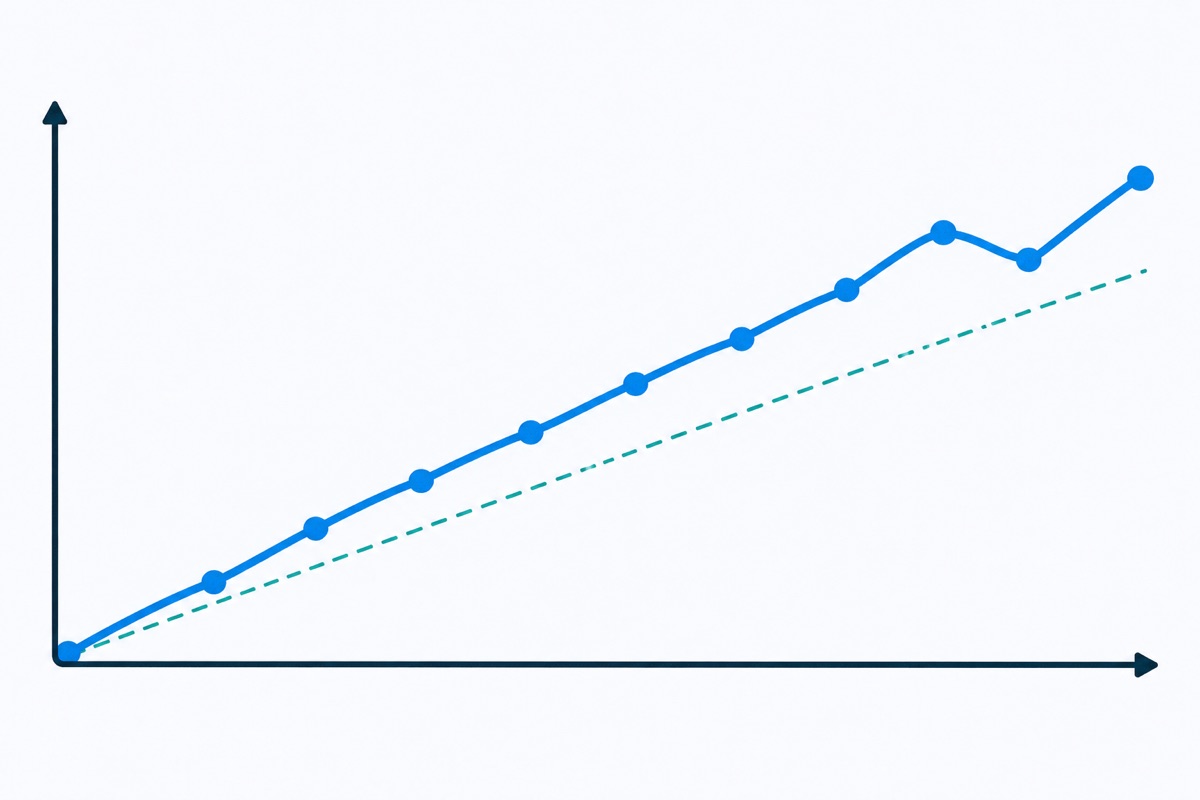
- Treating one score as a trend. One score is a dot. A trend needs several dots. INSTEAD: Put your last three or four practice scores side by side. Are they climbing overall, flat, or falling every time? Only a pattern deserves a big reaction.
- Ignoring the conditions. Did you take this one at night after a ten-hour workday? Did you pause for a phone call? Did you do it in two sittings? INSTEAD: Write down the honest conditions of every practice test. If this one was taken tired and interrupted, the score is measuring your exhaustion, not your skill.
- Looking only at the total. A total from 100 to 200 hides everything. INSTEAD: Break it into the three section scores. Did all three drop, or did one section fall while the other two held steady? Those are very different problems with very different fixes.
- Blaming the 'hard' questions. I'll bet that at least half of the questions you missed were ones you KNEW how to do. A misread word. A number copied wrong. A step done in your head. INSTEAD: Sort every miss into three piles: silly mistake, ran out of time, or truly didn't know. I'll bet the silly pile is LARGER than you expect.
- Skimming the review. Looking at the score and the right answers is not review. INSTEAD: Go question by question, including the ones you got right by guessing. Reviewing a practice test should take longer than taking it, and that is where the real information lives.
- Changing everything at once. New book, new schedule, new method, new test date, all in one night. INSTEAD: Pick ONE change based on what your review shows. If you change six things and your next score rises, you won't know which one worked.
What do you want MORE: to feel better tonight by doing something dramatic, or to score higher on Test Day by doing something smart? Those are not the same choice.
Do the Math on One Bad Day
Let's put a number on how much one bad test really moves things. This is a Problem Solving question, the Quant type where you solve and pick from five answer choices.
Now look at what that example actually says. The fifth score was 10 points below the old average, and the average barely moved. Two points. That's what one bad test does to the big picture when you treat it as one data point among several. It's only a catastrophe if you decide it is.
What That Low Score Is REALLY Telling You
A low score is not telling you that you're bad at this. It's telling you something specific, and your job is to figure out what. As a future Executive MBA student, you are NOT allowed to say "I have no idea why it dropped." You'll be asked to diagnose far messier problems at work every week. Do it here.
Here's what a dip usually turns out to be:
- A conditions problem. You were tired, distracted or rushed. The fix is to schedule your next practice test like the real thing: protected time, quiet room, one sitting.
- A process problem. You stopped taking notes, started doing math in your head or kept re-reading. Those habits slip when you're tired, and they cost both time and accuracy. The fix is to rebuild the habit on purpose in your daily practice.
- A single-section problem. One section dragged the total down. Maybe Integrated Reasoning (the section where you pull answers from tables, graphs and multiple sources at once) threw a format at you that you hadn't drilled. The fix is targeted practice on that one area, not a whole new plan.
- A content gap. Sometimes there really is a topic you don't know yet. Good. Now you know exactly what to train next.
Notice that none of those say "start over." And remember, you don't need a perfect section to hit your goal. You need to stop giving away the questions you already know how to get.

Don't get too down on yourself. A dip in the middle of training is normal. Athletes have off days in practice all the time, and the good ones look at the film instead of firing the coach. The EA is a standardized, predictable test. That means you can train for it, and it means the score you earn reflects how well you trained, not how you felt one night.
Your Move, Today
Open that practice test right now. Not tomorrow. List every question you missed and every question you guessed on. Next to each one, write one word: silly, time or didn't know. Then count the piles. Whichever pile is biggest is your ONE change for the next two weeks. Write that change at the top of your study plan, and leave the rest of the plan alone.