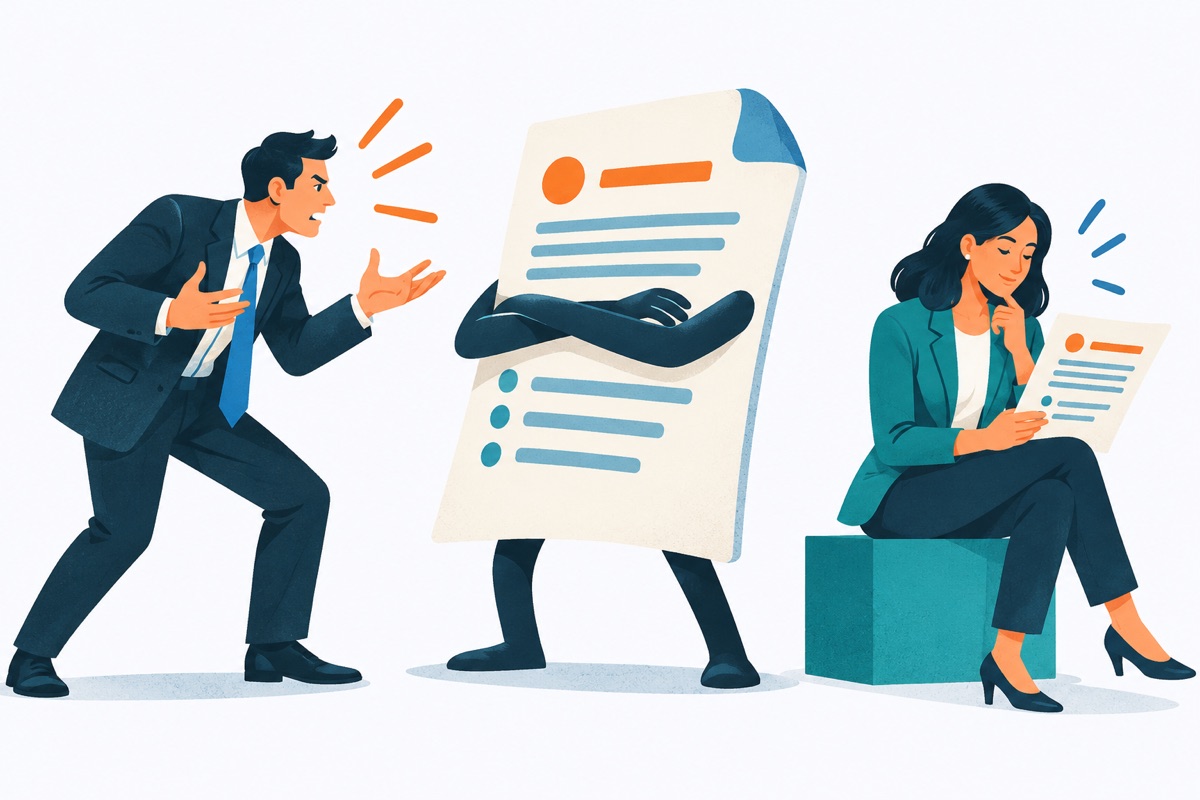
Reading Comprehension Is a MAP Problem
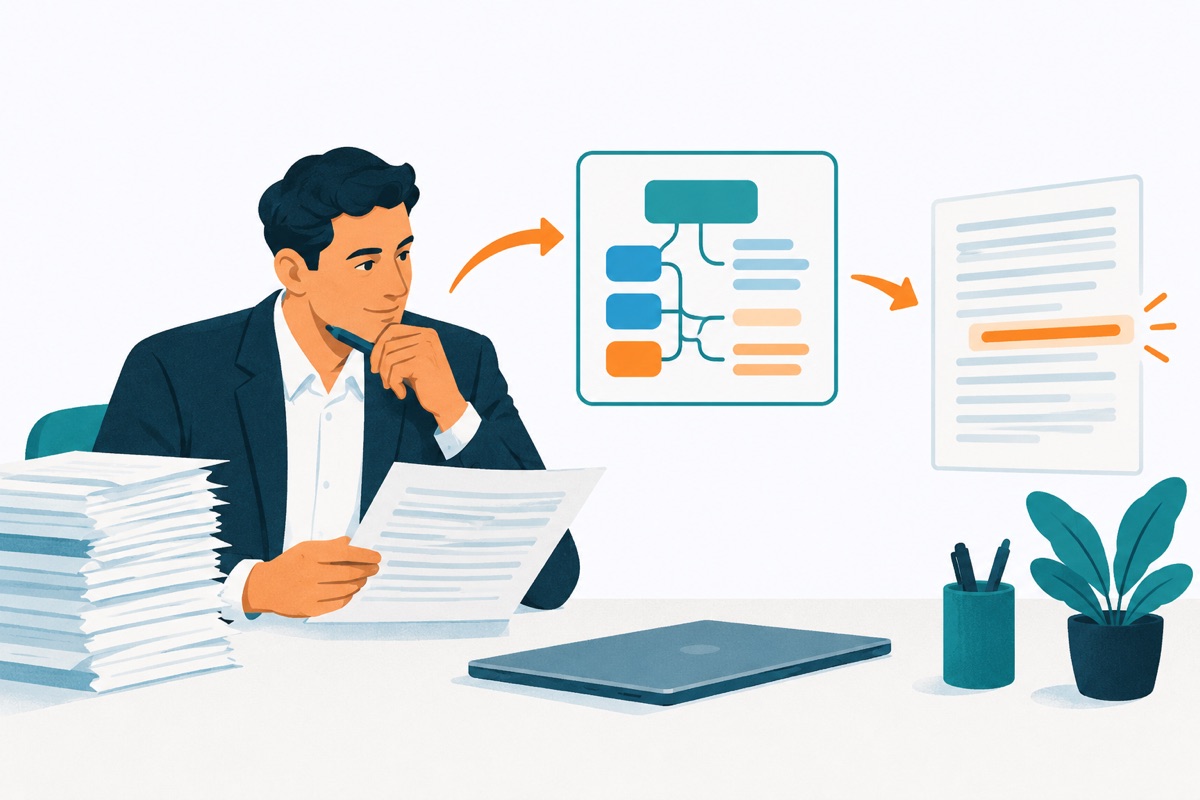
It is 9 p.m. You finished work two hours ago. You are at your kitchen table, taking a practice Executive Assessment, and the Verbal clock is running. A Reading Comprehension passage pops up. Reading Comprehension, or RC, is the question type where you read a short passage and then answer questions about it. You read every word carefully. You hit the first question. And your eyes go straight back to the top of the passage.
Here is my verdict. That reread is not care. It is a LEAK. The fix is not reading faster. The fix is reading differently.
The clock does not care how carefully you read
The Verbal section of the Executive Assessment gives you 30 minutes for 14 questions. Those questions mix Sentence Correction, Critical Reasoning and Reading Comprehension. You can check the setup on GMAC's Executive Assessment structure page. Do the math on your pad: 30 minutes is 1,800 seconds. Divide by 14 and you get about 128 seconds. That is a little over 2 minutes per question, on average.
Now say you face a passage with three questions. Say you reread the passage for 45 seconds before each one. That is 135 seconds. You just spent MORE than a full question's worth of time reading something you already read. And you still have Sentence Correction and Critical Reasoning waiting.
I'll bet your second read of a passage takes LONGER than your first. Why? Because the first time you were reading for meaning. The second time you are hunting for one detail with no idea where it lives. That is not reading. That is searching a dark room for your keys.
Why you reread: you are trying to MEMORIZE
Stop reading this post for a second and answer this. When you read an RC passage, what are you trying to do? Be honest.
Most people are trying to hold the whole thing in their head. Every name, every number, every "however." That feels responsible. It is actually a trap. Your brain cannot hold 300 words of dense text after a full workday. So it drops details. Then a question asks about one of them, and you have to go back and read it all again.
The pride version of this sounds like "I'll just remember it." You won't. Not reliably, and not at 9 p.m. You have to decide what you want MORE: a higher Verbal score, or the feeling that you didn't need to write anything down.
What a map actually is
A map is a set of short notes, one line per paragraph, that tells you two things: what that paragraph DOES and where the author stands. That's it. It is not a summary. It is not a copy of the passage. It is a set of signs that point you to the right spot when a question shows up.
Think of it like a trainer's notes on a workout. They don't write down every rep. They write "legs, heavy, knee felt off." Five words that tell them exactly where to look next time.
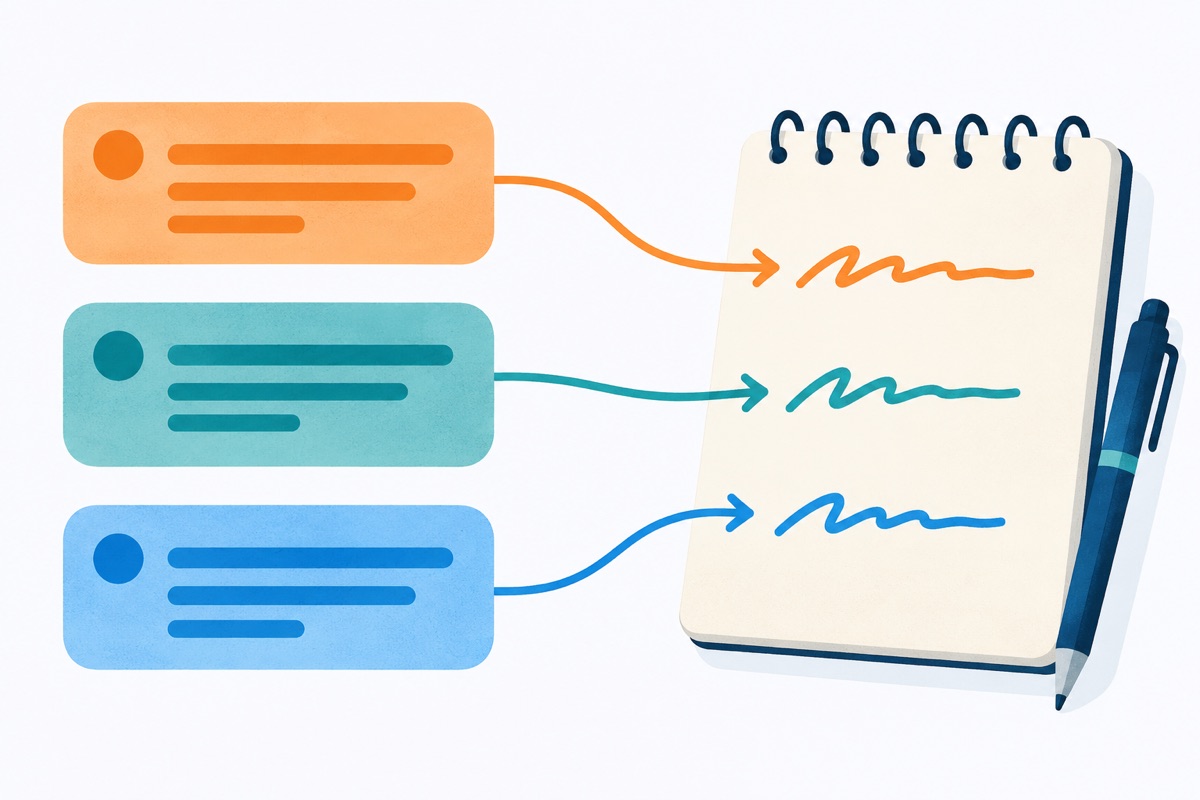
A good map line has two parts:
- The job. Is this paragraph giving an old view, explaining a cause, giving an example, or pushing back?
- The turn. Did the author agree, disagree or partly disagree? Words like but, yet, however and goes too far are where the points hide.
If you have been working on Critical Reasoning, this should feel familiar. You are tracking the structure of an argument, not judging whether it is true.
Watch it work
Notice what you did not do. You did not memorize what drivers used to do before the road was widened. You did not hold "rush hour" in your head. You wrote three short lines, and those lines took you straight to the one sentence that mattered. That same instinct, trusting proof over feel, is the whole point of "Sounds Right" Is NOT a Grammar Rule.
5 mapping mistakes I see all the time
Writing a summary instead of a map. Some people copy half the passage onto the pad. That takes forever and you still can't find anything.
INSTEAD: Aim for about 5 to 10 words per paragraph. Job plus turn. Use symbols like = and BUT.
Skipping the author's opinion. Facts are easy to find again. The author's stance is what the questions test, and it is easy to miss.
INSTEAD: Every time you see but, yet, however or a phrase like goes too far, put it in your map. In CAPS.
Rereading the whole passage for every question. This is the leak this whole post is about.
INSTEAD: Read the question, check your map, go to ONE paragraph. If your map can't point you anywhere, your map was too thin. Fix that in practice.
Answering from memory. You remember the gist, pick the answer that matches the gist, and lose the point. See (D) above.
INSTEAD: Prove every answer with a line from the passage. If you can't point to it, it's not proven.
Mapping only when the passage feels hard. Easy passages lull you into skipping notes. Then you make a silly mistake on an easy question, which is the WORST place to lose a point.
INSTEAD: Map every passage, every time, in practice. It has to be automatic before Test Day, whether you test at a center or at home.
But won't mapping slow me down?
For the first week, yes. A little. Anything new feels slow. That is training, and training is supposed to feel awkward before it feels smooth.
But compare the two plans. Plan one: read once with no notes, then reread for every question. Plan two: read once while writing a few words per paragraph, then go straight to the spot. Plan two costs you some seconds up front. Plan one costs you a reread on every single question. Which one do you think wins over a 30 minute section? Don't guess. Time yourself both ways and look at your own data.
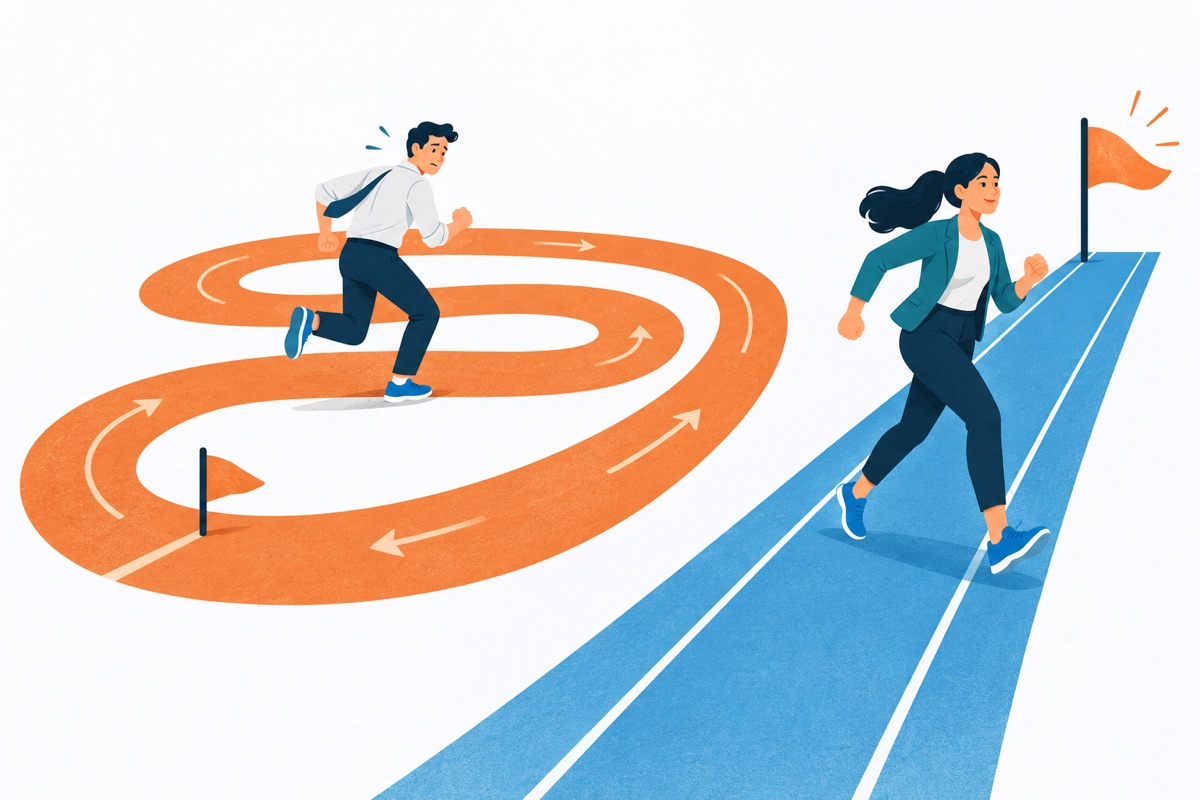
You are a working professional. You already do this at your job. Nobody reads a 40 page report three times before a meeting. You skim it, jot the key points, and flip to page 12 when someone asks about the budget. The Executive Assessment is asking for the same skill. Use it.
Your assignment for tonight
Pull up one RC passage you have NOT seen before. Before you look at a single question, write one line per paragraph: the job and the turn. Then answer the questions using only your map to decide where to look. Every time your eyes go back to the top of the passage, make a tally mark on your pad.
Count the marks when you're done. That number is your leak. Your job this week is to get it to zero.